DOT Physical Exams — Only $100
Same day appointments available. Get your DOT certification quickly and affordably from our FMCSA certified medical examiners.
Stay Informed. Stay Certified.
Learn what it takes to pass your DOT exam and keep your driving career on track.
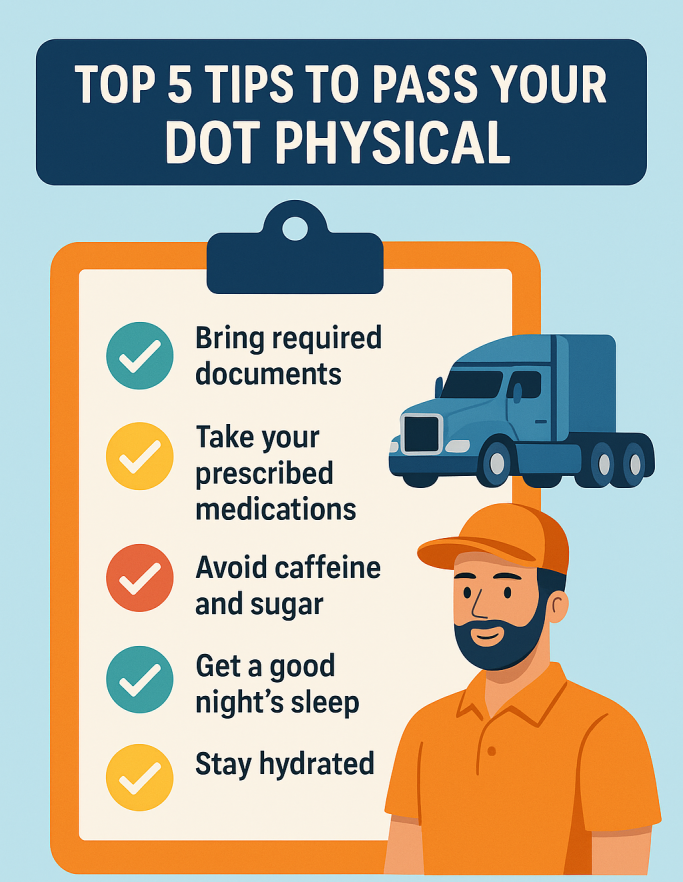
How to Pass a DOT Physical
Learn easy tips to pass your physical, from blood pressure tricks to vision and hearing tips.
How to pass a DOT physicalMedical Conditions & Clearance
Get clear answers on rules for diabetes, sleep apnea, high blood pressure, heart issues, and more.
See medical conditions & clearance rulesWhat Disqualifies a Driver?
Find out what health conditions might delay your medical card — and how to avoid common mistakes.
See what disqualifies a driverWhat If I Don't Pass?
Don't worry — we'll explain your next steps, including retesting, specialist letters, and appeals.
What to do if you don't passWhat Does a DOT Physical Consist Of?
If your employees are designated as "safety-sensitive" for the Department of Transportation (DOT) - meaning their job can impact both their own safety and the safety of the public - they are required to have a regular physical to be compliant and keep working.
A DOT physical follows strict guidelines mandated by the Federal Motor Carrier Safety Administration (FMCSA), ensuring that commercial drivers and other safety-sensitive employees are in good health to work safely.
What to Bring to Your DOT Physical
Commercial drivers need to bring a complete list of their medications, including the dosage regimen, dosages, and their doctors' names and addresses. To save time, fill out the health history questionnaire before coming to the clinic.
Drivers with certain medical issues need to bring:
- Vision or hearing problems: Bring eyeglasses, contacts, or hearing aids
- Diabetes: Bring the most recent Hemoglobin A1C (HgA1C) lab results and blood sugar logs
- Heart-related issues: Bring a letter from your cardiologist outlining medical history, current medications, and confirmation that you are safe to work
What the DOT Physical Covers
Vision
Drivers are required to have at least 20/40 acuity in each eye with or without correction. They are also required to have at least 70° peripheral in the horizontal meridian, measured in each eye.
Hearing
Drivers must be able to perceive what is known as a "forced whisper" at a distance of 5ft or less, with or without a hearing aid. This standard equates to an average hearing loss in the better ear of less than 40 dB.
Blood Pressure/Pulse
The medical examiner will check the driver's blood pressure and pulse to look for high blood pressure and irregular heartbeats.
Urinalysis
A urinalysis is required. The test looks for indications of underlying medical conditions such as diabetes.
Physical Examination
The physical exam covers general appearance, eyes, ears, mouth/throat, heart, lungs, abdomen, vascular system, extremities, spine, and neurological assessment.
The Physical Examination Covers:
Receive Your Certificate Same Day
A DOT physical can only be completed by a medical examiner certified by the FMCSA. Certified drivers will receive their certificate after passing a DOT exam on the same day.
Book Your AppointmentDownloadable Forms
Save time by filling out these forms before your appointment.
Ready to Get Your DOT Physical?
Schedule your appointment today. Same day appointments available.
Related Services
Explore other services that complement your healthcare needs